Hyundai Tucson vs Kia Sportage: Twin SUVs Compared for Iraqi Buyers
Two closely related family crossovers, compared on trims, reputation, and value. The photo is a Tucson. The right one is the car you can inspect, not the badge you prefer.
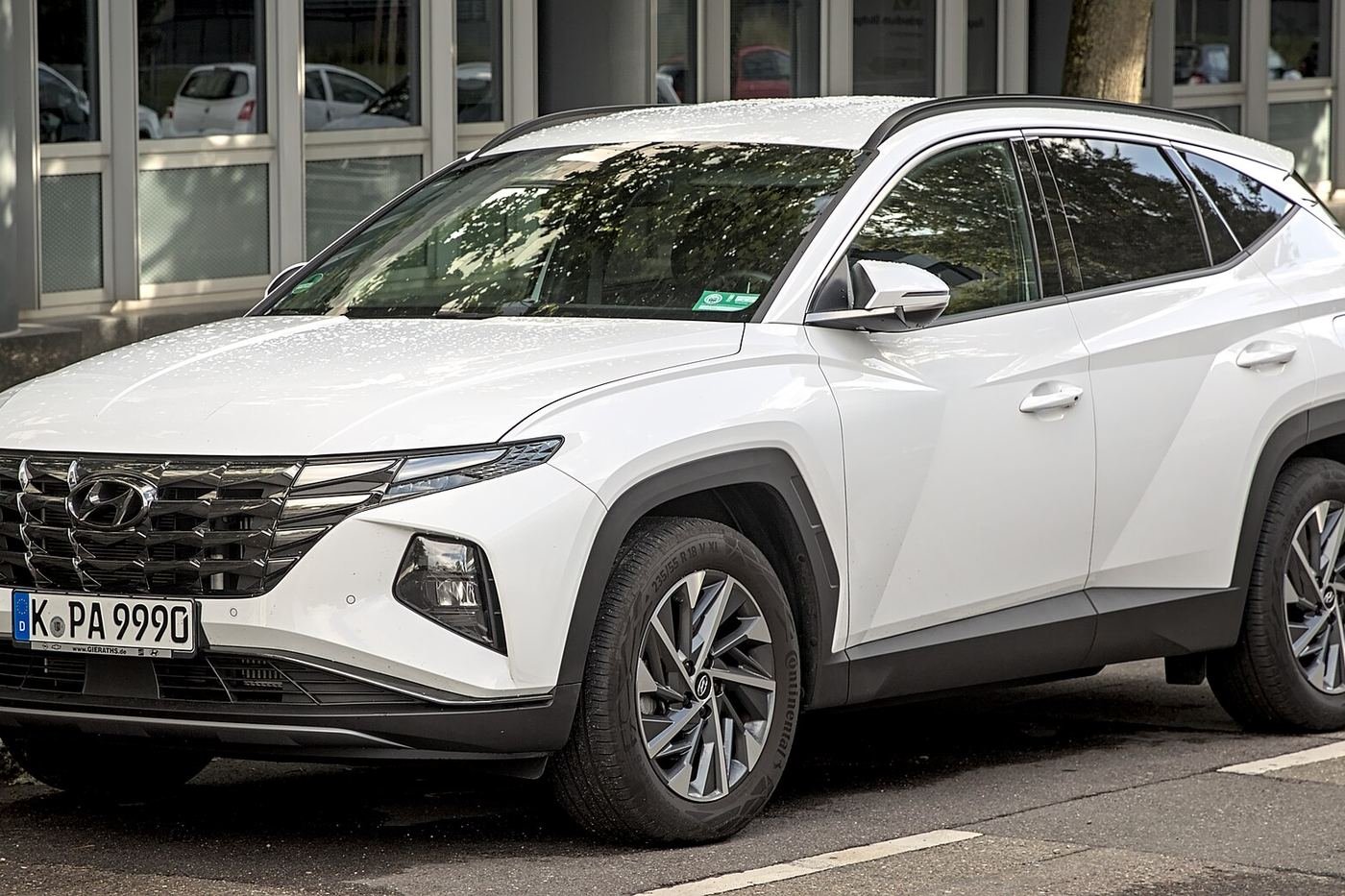
Hyundai and Kia are corporate siblings, and the Tucson and Sportage are the family crossovers Iraqi buyers put on the same shortlist. Recent generations sit in the same size class and often feel similar from the driver's seat: a high chair, a useful boot, and a cabin aimed at family duty rather than off-road theater. They are not identical. Year, trim, drivetrain, and spec origin change the car more than the grille does. The photo shows a Hyundai Tucson (NX4 generation). The Sportage has its own review and its own photo on this site.
Best Selling Cars Blog has ranked both near the front of Iraq's model tables at different times. For full-year 2025 that outlet put the Sportage in the top five, and in other recent periods it has shown the Tucson ahead of or near the Sportage. Shares move. The useful point is that both are common. Common means you can compare several examples, and it means workshops have seen them. It is not a quality ranking.
How to compare like with like
Put two adverts side by side only if the year, the drivetrain, and the spec origin are in the same conversation. A nearly new GCC Tucson is not the pair of a high-mileage US-spec Sportage. If you blur those, you will "prove" that one badge is cheaper when you have actually proved that one car is older or riskier.
Search Tucson listings and Sportage listings. Note who is a dealer and who is private, and which currency the price uses. Do not convert in your head with a rate you saw last month. Ask the seller to restate the price in the currency on the advert.
Sit in the back of both. Families discover the wrong car at the second row, not at the grille. Fold the seats if you carry cargo. Try the AC at idle in both, on the same day if you can. The one that fades in traffic loses, even if its screen is larger.
Reputation
Hyundai and Kia share a parts culture in Iraq in the sense that both are volume brands with agency and independent support in the big cities. One workshop may prefer one badge because that is what its customers drive. Ask your own mechanic which they would rather see next year, and ask a parts counter about a condenser and a headlamp for each VIN. Reputation on a forum is less useful than that phone call.
Reliability talk should stay modest. Both ranges have good cars and neglected cars. The neglected one is usually the one with no service stamps, a fresh respray on one corner, and a seller who is in a hurry. Those clues are in the buying guide and the inspection guide. Use them on both badges. Loyalty is not an inspection method.
Value
Value is the car that passes inspection at a price you can compare with two other honest adverts. It is not a percentage this article will invent. If Tucson adverts in your city are consistently better documented than Sportage adverts, or the reverse, buy the documented one. A thinner service file is not worth a small discount if you cannot price the unknown repairs.
Warranty remaining on a newer example is worth reading. The terms are on the contract. Do not assume a Kia warranty and a Hyundai warranty are the same length or the same list of covered parts. Ask, and keep the answer.
Spec origin can erase the "twin" idea. A Korean-market car and a GCC car can differ in cooling equipment and in parts numbers. The spec guide is the companion to this comparison. If one of the two cars is an auction import and the other is a local or Gulf car with a file, they are not twins anymore.
Which should you buy
Buy the Tucson if the example you can inspect is the better car: cooler AC at idle, cleaner history, a VIN the parts counter recognizes, and a price that still makes sense next to other Tucsons. Buy the Sportage on the same test. There is no permanent winner. There is a winner in your city this month, and it is the car a mechanic will sign their name under.
Buy the Sportage if you specifically want the badge that 2025 published charts placed in the national top five, and the car itself is sound. Buy the Tucson if the Tucson in front of you is the one with the file and the cooling system. Ignore anyone who tells you the badges are interchangeable and therefore the inspection is optional. Sibling cars can both be disappointing when they were crashed, flooded, or deferred.
Skip both if you need a work pickup or a serious off-road vehicle. They are family crossovers. The Hilux and Frontier comparison is a different job.
Pros of shopping them together
- You double the number of honest examples you can walk away from.
- Workshops in major cities know both.
- The size class fits the same family brief, so a back-seat test is a fair test.
Cons
- Trims and origins vary enough to make a lazy comparison misleading.
- Fuel use is similar and crossover-like. Switching badges will not turn one into a small sedan.
- Sellers sometimes price the name, not the car. Your only defense is more adverts and a lift.
Verdict
Treat the Tucson and the Sportage as one shopping list with two badges. Inspect both to the same standard, prefer the documented car with the stronger idle AC, and do not pay extra for a grille. If you want the longer ownership notes on the Kia, read the Sportage review. Then go and look at the Hyundai anyway.
Sources
Ranking context: Best Selling Cars Blog, Iraq full-year 2025 and the same outlet's earlier Iraq tables, which have placed the Tucson near the top in other periods. Figures are estimates from that publisher. Confirm equipment on the car.