The Pre-Purchase Inspection Checklist for Iraq Heat and Dust
A mechanic-style pass over the radiator, condenser, air conditioning, filters, bushings, and underbody before you pay. Heat and sand punish the parts owners forget.
A short test drive in mild weather hides the faults that show up in an Iraqi July. Radiators, condensers, cabin filters, and suspension bushings live in heat, dust, and traffic. This checklist is what to look at with a mechanic before you pay. It is not a scored inspection, and it will not tell you a repair price. Prices belong to the workshop you choose.
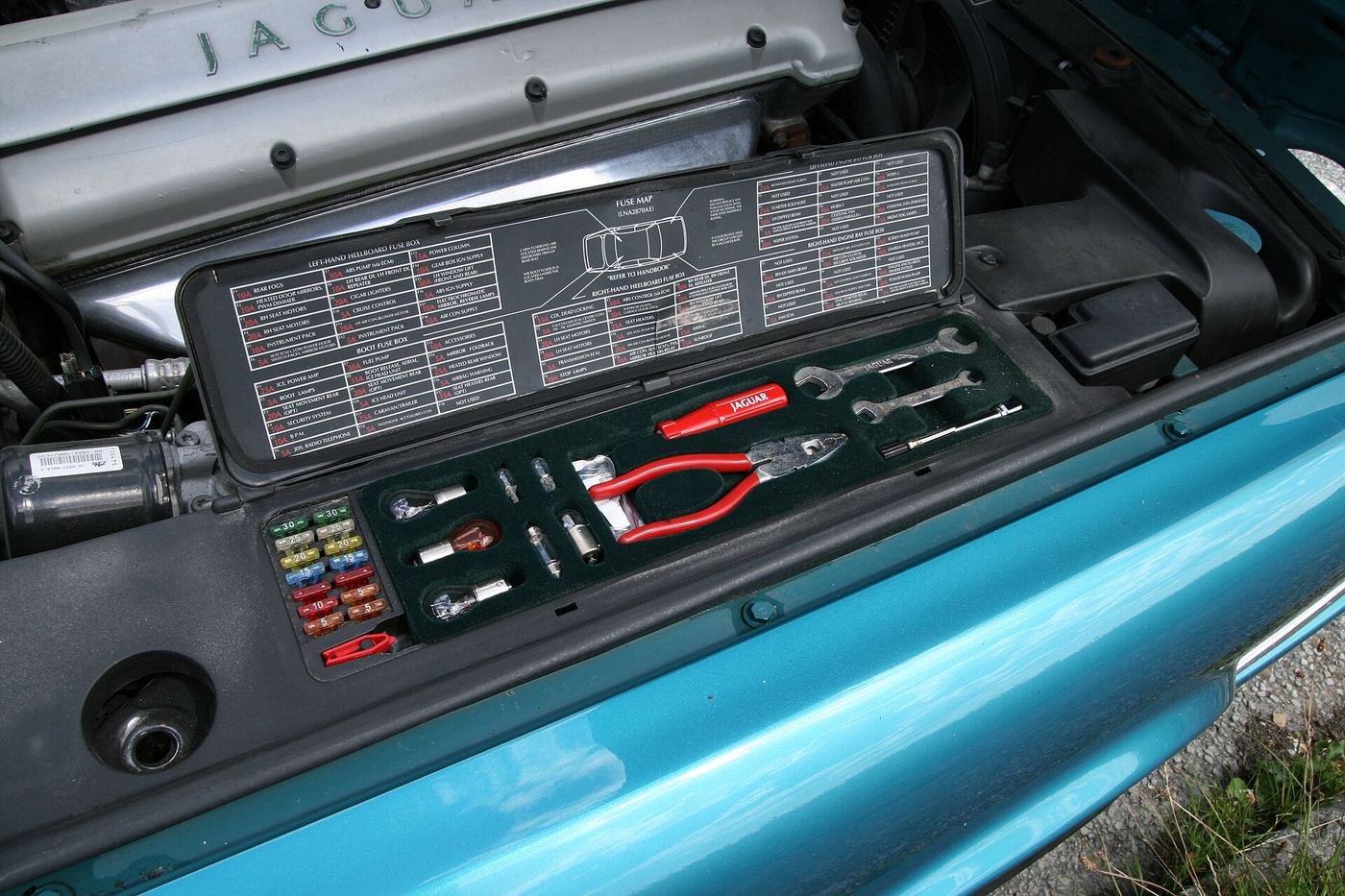
The photo is a Jaguar engine bay, shown so you can see what an open hood actually looks like: hoses, a radiator area, and fluid reservoirs. It is not the car you are buying, and it is not an Iraqi listing. Use it as a map, then look at the vehicle in front of you.
Before the hood comes up
Agree that a lift, or at least a cold and a hot look underneath, is part of the visit. If the seller refuses, you are allowed to leave. Bring a flashlight. Dust hides cracks, and a phone torch is better than memory.
Start the car from cold if you can. A seller who only lets you see a fully hot engine may be hiding a hard start or a noisy cold tick. Note the temperature gauge from the first minute to the end of the drive. A needle that climbs in traffic and only settles on the open road is a cooling story.
Radiator, hoses, and fans
Look at the radiator face. A mat of bugs, cottonwood, and fine dust on the fins means the core cannot shed heat. Bent fins across a wide patch do the same. Check the plastic end tanks for staining that traces a slow leak. Squeeze the upper and lower hoses when the engine is cool enough to touch. A hose that is rock hard, cracked at the clamp, or swollen is a future roadside stop.
Watch the electric fans with the air conditioning on, at idle. They should cycle in a way that holds temperature, not scream constantly or sit still while the gauge rises. Ask when the coolant was changed and what color it is now. Milky coolant can mean oil mixing. Rust-brown coolant means neglect. Do not taste it, and do not open a hot cap.
A missing fan shroud, a bypassed thermostat, or an extra switch taped to the dash are homemade fixes. They can be honest attempts to survive summer. They are also a sign the cooling system has already failed once. Price the car accordingly, or walk away. Do not invent a "normal" repair bill in your head. Get one from a workshop using the chassis number.
Condenser and air conditioning
The condenser sits in front of the radiator and clogs first. If you cannot see light through it, airflow to the radiator is already compromised. Oily dirt on the condenser often marks a leak.
In the cabin, set the AC to full cold at idle, doors closed, after the car has idled for several minutes. You want a strong, steady stream from the center vents, not a breeze that only works while the car is moving. Listen for a compressor that cycles rapidly or a belt that squeals when the AC engages. Check the cabin filter. In dusty cities it packs solid and smells like a wet carpet. A cheap filter is not why you buy or reject a car, but a filter that has clearly never been changed tells you how the car was kept.
Rear AC, if fitted, should be tried on its own. Family SUVs and vans are sold on that promise. Confirm it.
Air intake, dust, and what the filter says
Pull the engine air filter, or ask the mechanic to. Sand packed into the pleats means the engine has been eating dust. Look at the airbox seals. A loose clip is enough for a dusty shortcut around the filter. On a turbo car, that shortcut is expensive later. This guide will not quote a turbo replacement cost. It will tell you to treat a filthy airbox as a reason to inspect compression and boost behavior, not as decoration.
Suspension bushings and steering
Heat dries rubber. Dust grinds ball joints. With the car on the ground, bounce each corner once. It should settle, not pogo. On a lift, look at control-arm bushings for cracks and for metal that has walked out of the rubber. Split dust boots on ball joints and steering racks let grit in. Torn boots are a small part and a large warning.
Drive over a rough patch you know. Clunks on small bumps, a wheel that does not return to center, or a pull that the seller blames on "the road" need a second opinion. Uneven tire wear is a cheap clue to alignment, bent arms, or a tired bushing. Measure nothing by eye if you can help it. Point, and let the mechanic say whether it is safe.
Underbody, exhaust, and leaks
Look along the rails, the spare-wheel well, and the seams behind the plastic shields. Surface dirt is normal. Flaking rust that you can push a screwdriver into is not, especially on a car sold as a local or Gulf vehicle that "never saw salt." Fresh black underseal on only part of the floor can hide a repair or a water line. Pair this look with the flood and salvage guide.
Oil wetness on the underside needs a source. A light sweat at a drain plug is different from a differential that is soaked. Do not crawl under a car that is held up by a jack and hope. Use a lift or stands.
What a pass still does not prove
A clean radiator and a cold vent do not prove the gearbox, the odometer, or the legal identity of the car. Keep the chassis check and the paper check from the buying guide. An inspection is one layer. It is not the whole purchase.
If you want a second example of the same model before you decide, compare live adverts rather than a single seller's promise. Family crossovers such as the Kia Sportage and work trucks such as the Toyota Hilux are common enough that you can see how honest listings describe AC, service, and origin.
Sources
This checklist is practical workshop advice, not a government inspection standard. Conformity inspections for imports are a separate process described by COSQC. Heat and dust maintenance themes are widely covered by regional outlets such as Gulf News Auto. None of them can see the car you are standing next to.