Toyota Land Cruiser (Prado / 300 Series) Ownership in Iraq
Status, the reliability story, running costs, and what to inspect on high-mileage Gulf and local examples of two different Land Cruisers.
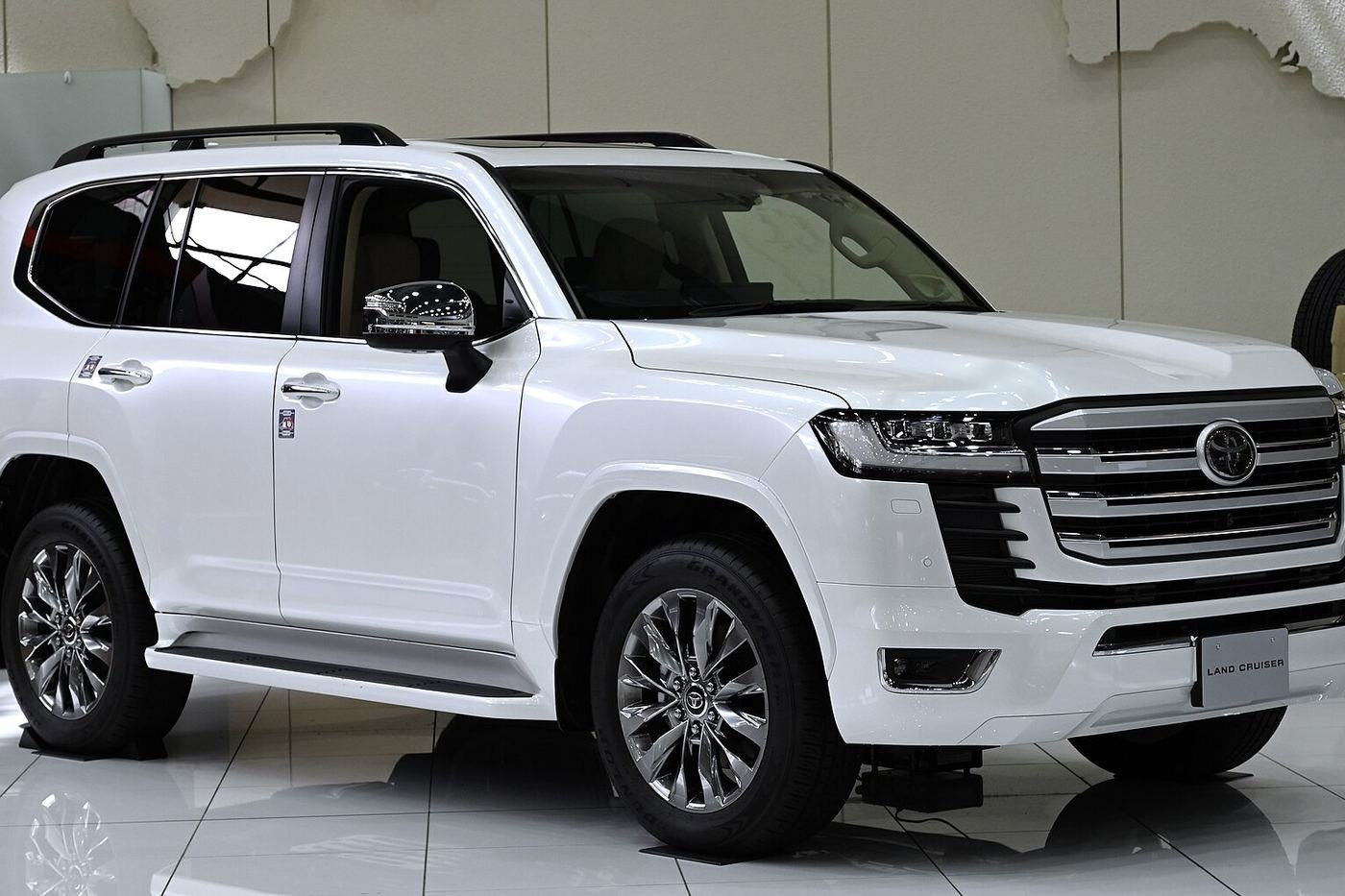
In Iraq the Land Cruiser is a social fact as well as a vehicle. People recognize it, workshops stock it, and sellers lean on the name when the car itself is tired. There are also two different vehicles in that conversation. The Prado is the separate model many families mean when they say Land Cruiser in daily speech. The 300 Series is the newer flagship that replaced the 200 Series. They do not share a price, a parts bin, or an inspection. The photo shows a Land Cruiser 300. It is not a Prado.
Suuqak's demonstration catalog includes both Land Cruiser and Land Cruiser Prado adverts, in gasoline and diesel forms. Those are demo listings, not a price guide and not proof of what a fair ask is this week. Search Land Cruiser and Prado and read several adverts before you negotiate one.
Best Selling Cars Blog has listed the Land Cruiser among Iraq's higher-volume nameplates in recent years, behind the pickups and the family crossovers that lead the chart. It is popular. It is not the volume leader. Do not let a seller turn "everyone wants one" into a reason to skip the chassis check.
The reliability story, and the reality
The reputation is that these vehicles tolerate heat, bad roads, and high mileage better than most large SUVs. The reality is that they tolerate those things when the cooling system, the transmission service, and the suspension have been kept up. A 300 Series or a Prado with an unknown service history is a complex, heavy vehicle that can be expensive to correct. This review will not quote a workshop bill. It will tell you that "Toyota" is not a warranty against neglect.
High mileage is normal on Gulf and local examples. Mileage is not the enemy. Inconsistent mileage is. Look at wear on the driver's seat, the steering wheel, and the pedals, and compare that with the odometer and the service stamps. A low figure on a shiny car with a shiny pedal pad replaced yesterday is a question. Ask it.
Gasoline and diesel versions both appear in local listings. Which one you want depends on how you drive and on fuel availability where you live, not on a slogan. The fuel briefing explains why this site will not print a pump price. A large gasoline SUV will cost more to feed than a crossover. You already know that. Confirm which engine is in the car from the VIN and the badge on the cover, not from the advert headline alone.
Running costs, qualitatively
Budget for fuel, tires, brakes, and cooling parts that are sized for a heavy vehicle. Tires and brakes wear in proportion to weight and to how the car was driven. A Land Cruiser that towed or that spent its life in slow, hot traffic will show that on the pads and the radiator face. Parts availability is a strength versus a rare luxury import. It is not free. Independent workshops know these vehicles, which is an advantage when you are far from a dealer. Use that advantage. Do not skip the dealer or a specialist when the warning lights are on and nobody can explain them.
Air conditioning, including rear AC on family examples, is part of the purchase. Try it at idle. A Cruiser with weak AC is not a luxury vehicle in July. It is a hot room with a famous badge.
What to inspect
Use the heat-and-dust checklist, then add these because of how these vehicles are used.
- Chassis rails, spare-wheel well, and underbody corrosion, especially on imports. Fresh underseal on only one section needs an explanation.
- Radiator, condenser, and fan operation at idle with AC on. These are heavy vehicles. Cooling margins matter.
- Transmission behavior when hot, including a hill or a kickdown. Harsh shifts and a burnt smell are reasons to stop.
- Suspension and steering on a rough road. Large SUVs hide wear until a bushing is actually gone.
- Service records matched to the VIN. "Agency maintained" should mean stamps you can read.
- Spec origin. A GCC car and a US auction car are different risks. Read the spec guide and the flood and salvage guide.
On a 300 Series, do not assume every system a seller names is present. Walk through the features with the engine on. On a Prado, confirm whether you are in a gasoline or diesel example and whether the drivetrain is what the advert claims.
Status, and when it gets in the way
People buy these vehicles because they are recognized. That is a real reason. It is a bad reason to ignore a bent rail or a missing service file. The next buyer will be just as status-conscious and just as able to walk away. A clean, documented Prado will be easier to sell than a murky 300 Series, and the reverse is also true. Documentation beats generation.
Pros
- Workshop familiarity and parts depth that most large SUVs do not have in Iraq.
- A shape and a reputation that hold attention on the used market.
- Diesel and gasoline choices, and a Prado path that is not the same budget as a late 300 Series.
Cons
- Fuel and tires follow the weight. Running one is not like running a Sportage.
- The name hides tired, crashed, and auction examples. You have to inspect anyway.
- Prado and 300 Series are different cars. Mixing them up is how people overpay.
- Status sellers sometimes refuse a lift. That refusal is expensive.
Verdict
Own a Land Cruiser or a Prado if you want a large Toyota that Iraq knows how to keep, and if the example in front of you has a VIN, a cooling system, and a history you have checked. Do not own one because the badge ended a negotiation. If the seller will not allow the inspection, buy a different vehicle, even a less famous one, whose underside you have seen.
Sources
Popularity context: Best Selling Cars Blog, Iraq full-year 2025. Demo stock on Suuqak is illustrative, not a market price. Engine output and official consumption belong in the owner's manual for that VIN.