Hybrid vs Plug-in Hybrid vs Full EV for Iraqi Drivers
Which powertrain fits long highway days, generator households, and a thin public charging map. No invented cost per kilometer.
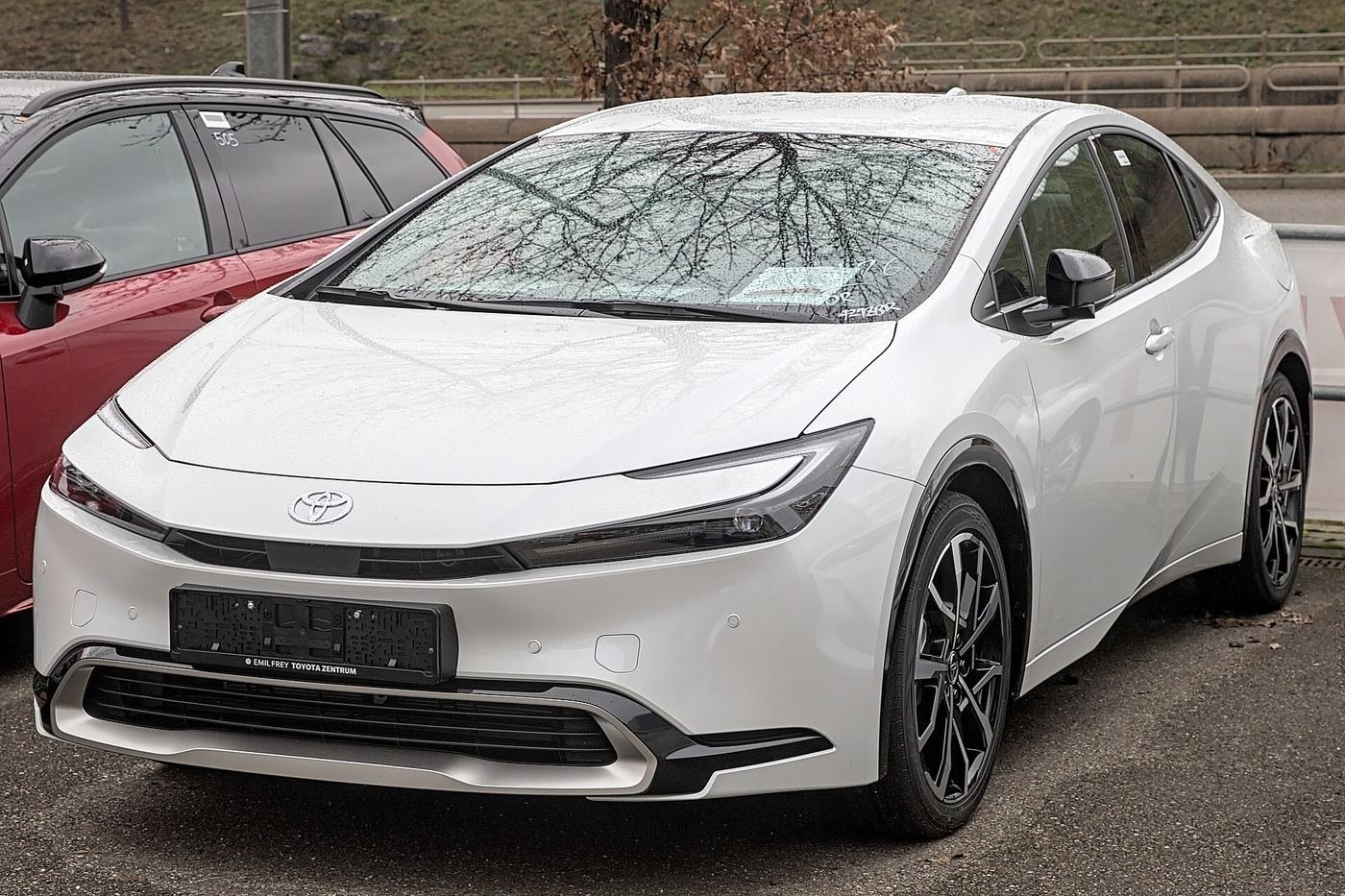
The word hybrid covers three different machines. A hybrid refuels like a normal car and uses a battery it charges itself. A plug-in hybrid can drive on electricity for a while if you plug it in, and it can keep going on gasoline when you do not. A full electric vehicle has no gasoline backup. Iraqi roads, fuel stations, generators, and a sparse public charging map make that distinction the whole decision. The photo shows a Toyota Prius plug-in hybrid. It is one example of the middle category, not a ranking.
This article will not tell you a cost per kilometer. Electricity tariffs, generator fuel, and pump prices move, and a lab figure would be fiction in July traffic. The fuel briefing tells you where to read official pump guidance. Your electricity bill and your generator habit are things only you can price.
Hybrid: the highway default
A hybrid, sometimes called a self-charging hybrid, does not need a plug. You buy gasoline (petrol) the way you do now. The battery helps in traffic and recovers some energy as you slow down. On a long highway trip you are limited by fuel stations, which Iraq has, not by charging posts, which it mostly does not. That is why a hybrid is the easiest electrified car to recommend to someone who drives between cities, keeps irregular hours, or cannot install a home charger.
You still depend on fuel quality and on a workshop that understands the hybrid system. Not every garage wants to open one. Ask before you buy. You also still want the ordinary inspection: cooling, AC, and accident history. A hybrid is not immune to a flood or a crash.
Toyota's hybrids are the ones many Iraqi buyers already recognize, including cars like the Prius that show up in used listings. Search hybrids and read the seller's words carefully. Some adverts say hybrid when they mean a plug-in, or the reverse.
Plug-in hybrid: only if you will plug in
A plug-in hybrid (PHEV) has a larger battery and a charge port. If you charge it, short daily trips can happen on electricity and the gasoline engine covers the highway. If you never plug it in, you carry a heavier car and you buy gasoline anyway. The plug-in then has the disadvantages of both sides. BYD's own Iraq pages describe several DM-i models as plug-in hybrids alongside fully electric cars. The point stands for any brand: a PHEV rewards a household that will actually charge.
Generator use is possible in principle and fussy in practice. The home-charging guide covers why an electrician has to bless that setup. Do not assume a PHEV charger is gentle enough for a small genset, and do not assume it is impossible. Get a yes or a no for your building.
On a long trip, a PHEV behaves like a gasoline car once the battery is down. That is the feature that makes it more forgiving than a full EV on the Baghdad to Basra kind of day, provided you are willing to burn fuel. It is not a free electric car.
Full EV: the strictest fit
A full EV needs energy from a plug for every kilometer. In Iraq that means home or workplace charging as the foundation, with public posts as an extra. The charging reality check explains how thin those posts still are. If your week is inside one city and the car sleeps next to a proper circuit, an EV can be calm and cheap to run relative to a large gasoline SUV. This article will not put a number on "cheap." Compare your own bills.
If your week includes long highway days without a charger you have already verified, an EV is the wrong tool. Renting courage is not a plan. Heat reduces the margin further because the cabin and the battery both want cooling. Read that article before you trust a mild-day test drive.
Servicing is the other gate. High-voltage work is specialist work. A brand with a local service point, such as the BYD network described in the BYD article, is a different risk from an imported EV whose nearest trained technician is a rumor.
Which should you buy
Choose a hybrid if you drive long distances, you cannot plug in, or you want the fewest new habits. You keep using fuel stations. You gain some efficiency in traffic. You do not gain a silent commute unless the car is in its electric creep, which is brief.
Choose a plug-in hybrid if you can charge most nights and you still want gasoline for the trip the map cannot support. Only choose it if you will use the plug. If you will not, buy a simpler hybrid and carry less complexity.
Choose a full EV if overnight charging is solved, your trips fit the battery with a margin you have tested in hot weather, and someone in your city can service the car. Choose it as a second car if the household still has a fueled vehicle for the unplanned journey.
Do not choose from a slogan about the future. Choose from the plug, the route, and the workshop.
Sources
Powertrain types follow the usual industry meanings and BYD Iraq's own split between DM-i plug-in models and battery-electric models, listed on byd.iq. Public charging density: PlugShare. No running-cost figure in this article is a quote.